
Walk into almost any pet lover’s home today and you’ll notice something has changed. The framed photographs and basic canvas prints that once dominated mantelpieces and shelves are slowly being replaced by something with far more depth — literally. 3D pet art has emerged as one of the fastest-growing categories in the personalized pet gift space, and for good reason. It turns a flat snapshot into a dimensional, handcrafted keepsake that captures not just what your pet looked like, but the feeling of having them in the room.
Whether you’re shopping for a grieving friend, a new puppy parent, or your own four-legged family member, understanding this trend will help you choose a gift that actually gets displayed — not tucked into a drawer. In this guide, we’ll explain exactly what 3D pet art is, why it’s exploding in popularity, the styles available, and how to pick the right piece.
What Is 3D Pet Art?
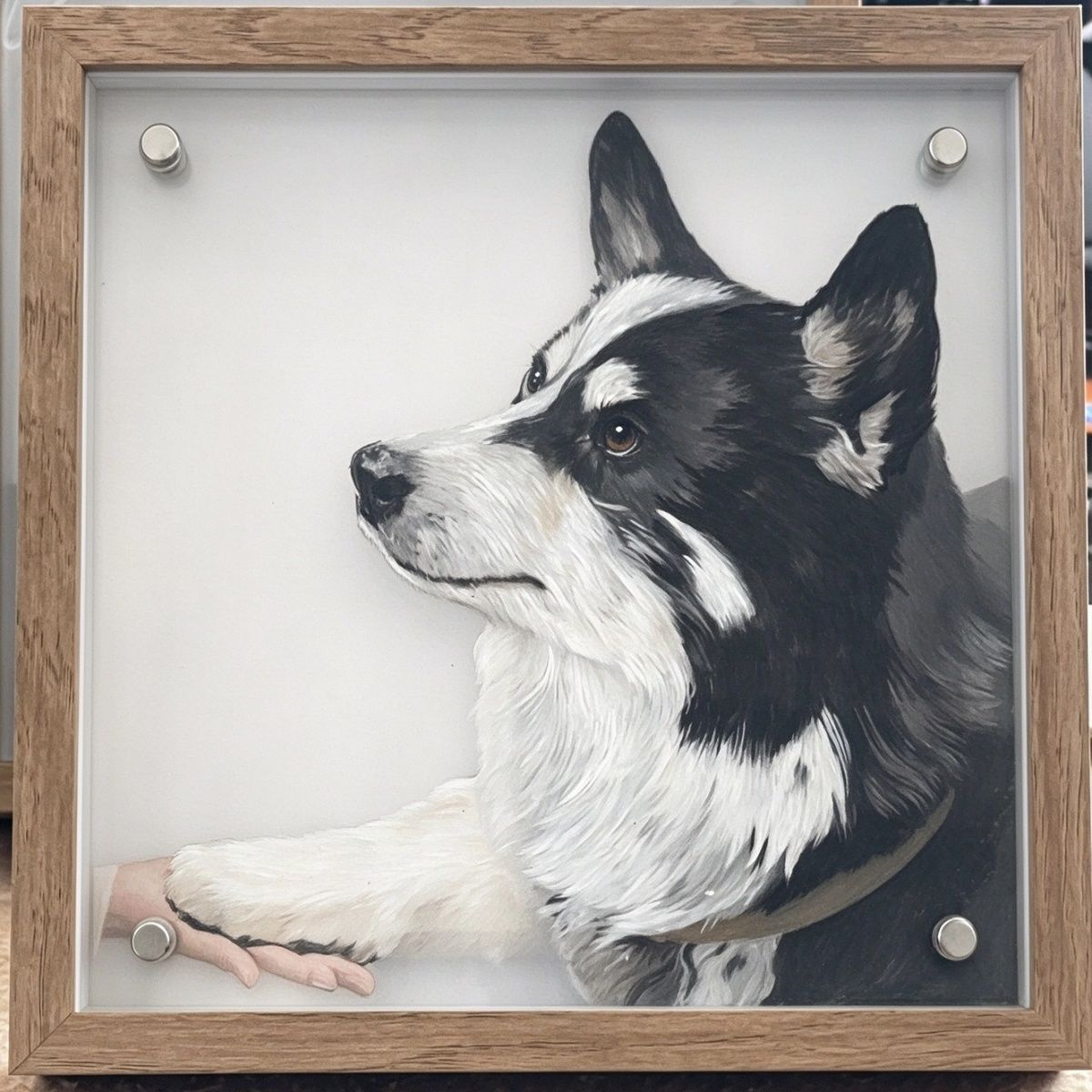
At its core, 3D pet art is any artistic rendering of a pet that adds physical depth and dimension beyond a flat two-dimensional image. Traditional photo prints sit flush against a surface. A 3D piece, by contrast, uses layered materials, sculpted relief, or raised texture so the image appears to step out from the wall or frame.
The most common approaches include:
- Layered paper-cut art — multiple precisely cut layers of high-quality cardstock are stacked and spaced apart to build a subtle, sculptural depth effect.
- 3D embossed and raised-texture canvas — the pet’s fur, ears, and features are given physical texture through layered pigment and relief work.
- Sculpted relief art — a hand-molded relief that mimics the contours of the pet’s face and body.
- Shadow-box and framed dimensional pieces — the artwork is set into a deep frame with interior spacing, creating a museum-quality look.
What ties all of these together is a handcrafted feel. This is not a machine print rolled off an assembly line; it’s a piece that an artist assembles layer by layer. That tactile quality is exactly what makes a custom 3D pet art piece feel so much more meaningful than a standard photo gift.
Why 3D Pet Art Is Taking Off Right Now
Several forces are converging to push 3D pet art into the mainstream. Understanding them helps explain why this isn’t a passing fad.
The Emotional Weight of Pet Ownership
Americans treat their pets as family, and the numbers prove it. According to the American Pet Products Association (APPA), U.S. households spent roughly $147 billion on their pets in 2023, with spending projected to keep climbing year after year. A growing slice of that budget is going toward non-essentials — gifts, keepsakes, and commemorative items — rather than just food and vet care. When a pet is treated as a family member, owners want more than a photo; they want a tribute that feels worthy of that bond.
A Broader Shift Toward Personalization
The personalized gift market has been growing steadily for years, with industry analysts estimating the global market at well over $25 billion and expanding at a compound annual growth rate of more than 5%. Consumers consistently rank personalization as a top factor when buying gifts, and pet owners are among the most enthusiastic personalization buyers of all. A 3D pet portrait sits at the sweet spot of this trend: it’s unmistakably one-of-a-kind because no two pets — and no two handcrafted pieces — are ever identical.
The Social Media Effect
Scroll through Instagram, TikTok, or Pinterest and you’ll find “pet art reveal” videos racking up millions of views. The unboxing and reveal format is inherently shareable, and dimensional art photographs beautifully in natural light. Each viral reveal introduces the concept to a new audience, and the trend feeds itself. Many customers tell us they first discovered custom 3D pet art through a friend’s social media post and knew immediately they wanted one for their own pet.
How 3D Pet Art Compares to Traditional Pet Portraits
If you’re deciding between a classic flat portrait and a 3D piece, it helps to understand the real differences.
Dimensionality and Texture
A flat portrait — whether painted or printed — relies entirely on color and composition to create the illusion of depth. A 3D piece adds actual physical relief. That extra dimension catches light differently throughout the day, so the artwork subtly changes as the sun moves across the room. Owners frequently mention that this “living” quality is what they love most; the piece never looks static.
Durability and Longevity
Because dimensional pieces are typically built from layered, sealed materials and set into protective frames, they hold up remarkably well to dust and fading. A quality 3D piece can sit proudly on a shelf for decades. Many customers frame their 3D pet art as a long-term heirloom rather than a short-term decoration, and they’re often surprised by how substantial the finished piece feels in the hand.
Popular Styles of 3D Pet Art
Not all 3D pet art looks the same. Here are the styles you’re most likely to encounter, along with who each one tends to suit best.
Layered Paper-Cut Style
This style uses several layers of premium cardstock, each cut to capture a different plane of the pet’s face, then spaced slightly apart inside a deep frame. The result is elegant and understated — perfect for modern, minimalist homes. It tends to photograph especially well and works beautifully for both cats and dogs.
Raised-Texture Canvas
Here the artist builds up pigment and texture directly on canvas, giving the fur a tactile, brushstroke quality. It’s a favorite among owners who love the look of a hand-painted portrait but want something with more physical presence. Running a hand lightly over the surface is a surprisingly emotional experience — several customers have told us it’s the closest thing to “feeling” their pet again.
Sculpted Relief
Sculpted relief takes dimension the furthest, molding the pet’s features into a low-relief surface that truly pops. These pieces are more expensive and take longer to produce, but they’re the closest you can get to a sculpture without commissioning a full bronze. They’re often chosen for memorial pieces and milestone celebrations.
Framed Shadow Boxes
Shadow-box pieces combine dimensional art with space for small keepsakes — a collar, a lock of fur, a paw print. They’re deeply personal and are one of the most popular choices for memorial gifts, letting owners preserve not just an image but a physical reminder of their pet.
What Real Customers Say About Their 3D Pet Art
Trends are easy to talk about in the abstract, but the real test is how a gift lands with the person who receives it. Here are a few of the experiences customers have shared with us.
One dog owner ordered a layered paper-cut piece of her 12-year-old golden retriever, Cooper, after he passed. She told us she expected to put it on a shelf and that would be that. Instead, she found herself stopping in front of it every morning — the layered depth made Cooper’s profile look so recognizable that she said it felt like he was “still watching the house.” She’s since ordered a matching piece for her family.
A first-time customer bought a raised-texture canvas of her Maine Coon cat as a Mother’s Day gift for her mom. Her mom, who “never cries at gifts,” reportedly teared up the moment she saw it. The customer’s takeaway: the textured fur made all the difference, because it captured her cat’s fluffiness in a way a flat print never could.
Another common scenario we hear about is the “impossible-to-shop-for” pet lover. Several buyers have told us they turned to a custom 3D pet art piece after years of gifting toys and treats that got used up and forgotten. The reaction, they say, is consistently different — a dimensional portrait is the kind of gift that stops a conversation, and it stays on display long after the occasion has passed.
We also hear from customers who are nervous about the process. They worry their photo isn’t good enough or that the final piece won’t look like their pet. Almost universally, their relief comes at the reveal — and their biggest regret is not ordering sooner.
How to Choose the Right 3D Pet Art Piece
With several styles to choose from, a little upfront thought goes a long way. Here’s what to consider.
Start With the Best Photo You Have
The quality of the final artwork depends heavily on the source photo. Look for images that are sharp, well-lit, and taken at or near eye level with your pet. Natural daylight works best, and a clear view of the face and eyes is essential — the eyes are where the likeness lives. Avoid blurry, backlit, or heavily filtered photos whenever possible.
Match the Style to the Person
Think about the recipient’s home and taste. A minimalist who loves clean lines will probably prefer a layered paper-cut or a simple framed piece. Someone with a cozy, eclectic home might love a raised-texture canvas or a sculpted relief. When in doubt, a versatile dimensional canvas is a safe, universally appreciated choice.
Consider Where It Will Live
Size matters. A small desk piece works beautifully for an office or nightstand, while a larger framed piece anchors a living room wall. Because 3D pieces have depth, remember that they protrude slightly from the wall — a consideration if the spot is tight or high-traffic.
Perfect Occasions for 3D Pet Art
Part of what makes this gift so versatile is that it fits almost any occasion. The most popular reasons customers order include:
- Pet loss and memorials — a dimensional tribute honoring a pet who has passed.
- New puppy or kitten welcome — a unique, lasting way to celebrate a new family member.
- Birthdays and “gotcha day” anniversaries — a keepsake that marks the milestone.
- Holidays — especially Christmas and Mother’s or Father’s Day for pet parents.
- “Just because” — many customers order simply because they want their pet’s likeness captured in a lasting form.
How Custom 3D Pet Art Is Made, From Photo to Masterpiece
If you’ve ever wondered what happens after you upload a photo, here’s a straightforward look at the process behind a hand-painted pet portrait with dimensional depth.
- Photo review — an artist reviews your photo for clarity and composition, and may ask for an alternative if the original won’t translate well into dimensional art.
- Design and layering plan — the artist maps out the depth layers, identifying which parts of the pet’s face will sit forward and which will recede.
- Creation — each layer is cut, sculpted, or built up by hand, then assembled. This is the most time-intensive stage and where the craftsmanship really shows.
- Quality check and finishing — the piece is inspected for detail and likeness, sealed for protection, and mounted into its frame.
- Delivery — the finished piece is carefully packaged to protect its dimensional surface and shipped to you.
Because so much of this work is done by hand, production times run longer than a standard print. Most customers find the wait worthwhile — the final result is a genuine handcrafted original, not a mass-produced copy.
Frequently Asked Questions About 3D Pet Art
What kind of photo works best for 3D pet art?
The ideal photo is sharp, taken in natural light, and captured at your pet’s eye level with their face and eyes clearly visible. A phone photo works perfectly fine as long as it’s in focus and not heavily filtered. Avoid blurry, dark, or backlit images, since those details are harder to translate into dimensional art.
How long does custom 3D pet art take to produce?
Because each piece is handcrafted layer by layer, production typically takes longer than a standard print — commonly a couple of weeks depending on the style and current order volume. It’s a good idea to order well ahead of birthdays, holidays, or other important dates to account for both production and shipping time.
Does 3D pet art work for any breed or type of pet?
Yes. The techniques translate well across dog breeds, cats, and other animals. Distinctive features — a Husky’s markings, a Persian’s flat face, a tabby’s stripes — often become even more striking with added depth. The key is a clear photo; a skilled artist can then capture the unique characteristics that make your pet recognizable.
How do I clean and care for a dimensional piece?
Dust gently with a soft, dry microfiber cloth or a can of compressed air held at a safe distance. Avoid water, cleaning sprays, or rubbing the textured surface directly. Keep the piece out of direct sunlight and away from high-humidity areas to preserve its colors and materials for years.
Give a Gift That Actually Lasts
The best gifts are the ones that outlast the moment — and that’s precisely what 3D pet art delivers. Where treats get eaten, toys get chewed, and even photographs get scrolled past, a dimensional portrait commands attention and holds it for decades. It’s a gift that says you understand how much that pet means.
If you’re ready to see your own pet — or a loved one’s — transformed into a handcrafted dimensional keepsake, explore our custom 3D pet art collection today. Upload your favorite photo, choose your style, and let an artist bring your pet to life in a way a flat photo never could.